Building a Strong Focal Point

A strong focal point commands immediate attention. These dominant elements anchor the entire composition and establish visual hierarchy.
Finding Your Focus: The Importance of Focal Points in Your Art
Have you ever looked at a painting and felt like your eyes were wandering aimlessly, not quite sure where to land? Or perhaps you’ve seen a piece that immediately grabbed your attention and led you on a visual journey? The difference often lies in the mastery of focal points.
In the world of painting, a focal point—or area of interest—is the "star" of your show. It’s the primary spot that tells the viewer what the painting is truly "about" and why you were inspired to capture that scene in the first place.
Building a successful focal point isn't just about what you include; it's about how you orchestrate every element to serve that center of interest.
5 Strategies for Building a Successful Focal Point
You can use these five powerful strategies to guide the viewer’s eye and make your paintings come alive:
Value Contrast (The Magnet for the Eye):
The eye is naturally drawn to the area with the greatest contrast between light and dark. To make your focal point pop, place your lightest light right next to your darkest dark in that specific area.Lines of Convergence (Leading the Viewer):
Think of these as "visual roads." You can use prominent lines—like a winding path, the edge of a cloud, or the direction of tree branches—to lead the viewer’s eye directly toward your intended point of interest.Sharpness and Detail (Selective Focus):
Our eyes naturally focus on things that are sharp and clear. By maintaining hard edges and intricate details at your focal point while keeping the rest of the painting soft or "loose," you tell the viewer exactly where to look.Intense Color (Vibrant Accents):
A burst of saturated, vibrant color can act as a powerful anchor. Using high-chroma colors against a more neutral or "grayed-down" background ensures your subject doesn't get lost in the noise.Strategic Placement (The Rule of Thirds):
Placement is key. Avoid putting your focal point dead center, which can feel static. Instead, try placing it about one-third of the way into the composition—often referred to as the "Golden Ratio" or "Sweet Spots"—to create a more dynamic and engaging flow.
Seeing the Strategies in Action
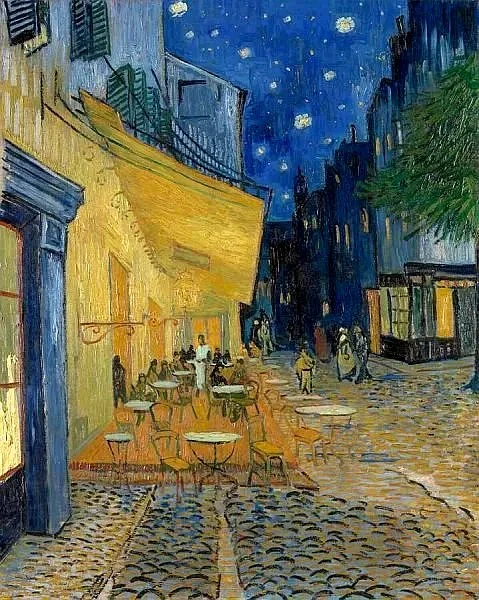
Café Terrace at Night by Vincent Van Gogh …
Van Gogh exemplifies focal point strategies through intense color contrast (warm yellows vs. cool blues), converging lines (cobblestones, tables) guiding the eye, and strategic placement of light sources, creating an inviting, glowing hub that draws attention amidst the deep night sky, highlighting the warmth and social energy of the café against the darkness.
Here's how specific strategies work:
Warm vs. Cool: The bright, warm yellows, oranges, and greens of the café's lights and walls create a powerful contrast against the deep, cool blues and indigos of the night sky and background buildings, immediately pulling the viewer's eye to the terrace.
Complementary Colors: The use of yellow lights against blue (complementary colors) makes both the lights and the sky appear more vibrant, enhancing the focal point's intensity.
Cobblestones: The pattern and seams in the cobblestone street create receding lines that direct the viewer's gaze directly to the brightly lit café.
Cafe Elements: Lines from tables, chairs, windows, and the awning all converge or point inward, reinforcing the central focus on the terrace.
Value Contrast: The café area is significantly lighter (higher value) than the surrounding night, making it stand out.
Source of Light: The glowing yellow lanterns themselves become powerful focal points, mimicking the sun's pull and creating an atmosphere of warmth and life.
Warmth & Invitation: The combination of light and color makes the café feel like a warm, lively social hub, contrasting with the quiet, dark night, embodying a sense of human connection.
By overlapping these techniques—intense color, directional lines, and bright value—Van Gogh creates a compelling focal point that is both visually striking and emotionally resonant, drawing the viewer into the scene's vibrant core.
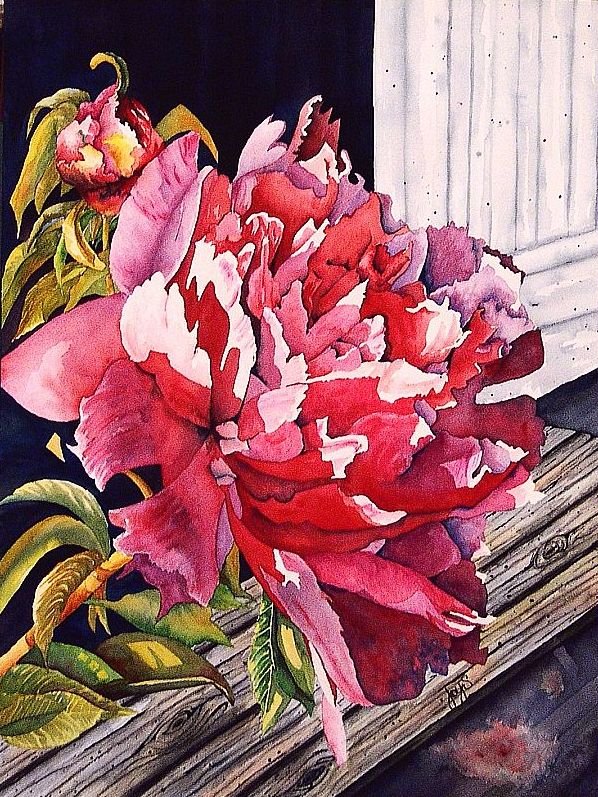
Sun Kissed Scarlet by Joy Skinner
…
In this painting the focal point is masterfully established on the upper right-hand side of the peony. This specific area, where the dark, shadowy interior of a building meets the crisp whiteness of a door, serves as a powerful anchor for the entire composition.
We can analyze how this specific contrast enhances the painting:
Extreme Value Contrast: This is the most critical strategy at play. By placing the "darkness of the inside" directly against the "whiteness of the door," I created the highest level of value contrast in the painting. This sharp transition acts as a visual magnet, immediately drawing the viewer's eye to that specific point of the flower.
Sharpness and Edge Work: In "Sun Kissed Scarlet," I kept the edges where the door meets the dark interior remarkably crisp compared to the softer, more ethereal petals. This selective sharpness reinforces the area as the primary focal point, as our eyes naturally gravitate toward the most defined details.
Leading Lines and Composition: The vertical and horizontal lines of the door frame and the building’s interior create a structured geometry that "frames" the right side of the peony. These lines act as arrows, funneling the viewer's attention toward the intersection of light and shadow.
Temperature Contrast: The cool, dark tones of the building's interior contrast sharply with the warm, sun-drenched "scarlet" of the petals and the brilliant white of the door. This play between warm and cool temperatures adds depth and prevents the painting from feeling flat.
Strategic Placement: By positioning this high-contrast area on the right side rather than the center, I adhered to the Rule of Thirds, creating a balanced yet dynamic composition that encourages the eye to travel through the rest of the floral details before returning to the anchor point.
By establishing this strong focal point, this painting isn’t just about painting a flower; I was able to create a narrative of light and sanctuary. The contrast makes the peony feel as though it is reaching out from a shadowed space into the brilliance of the sun, giving the artwork a profound sense of life and intentionality.
To see more examples of how light and contrast define a focal point, you can view the full collection of my work at Joy Skinner Art.
Why Does It Matter?
Whether your painting is a floral, landscape, or even an abstract, the way you tell your story starts with a strong focal point. A well-defined focal point does more than just look good; it creates balance, depth, and meaning. It acts as a visual anchor, preventing the viewer's gaze from scattering and ensuring your artistic message is communicated clearly.
Next time you start a painting, ask yourself: "What is the star of my piece?" Once you know, use these five strategies to set the stage and let that star shine!
Until next time …. Joy